The 27th JEONJU International Film Festival (JEONJU IFF, Festival Co-Directors MIN Sungwook and JUNG Junho) selected 10 films for the Korean Competition.
For the 27th JEONJU IFF Korean Competition, a total of 153 films were submitted, with the final selection comprising 6 fiction films and 4 documentaries. All 10 films will have their World Premieres at the festival, marking their first screenings for audiences in Jeonju.
The Korean Competition section of the JEONJU IFF presents feature films by directors making their first or second feature, regardless of genre, and has consistently drawn attention as a gateway for emerging filmmakers shaping the future of Korean cinema. Previous Grand Prize winners, such as, From You (24th edition), Time to Be Strong (25th edition), and Winter Light (26th edition) have been recognized for their artistic excellence.
For the 27th edition, 3 programmers of the JEONJU IFF served as juries: MOON Seok, Sung MOON, Molly KIM. Commenting on this year’s selection, the jury highlighted two notable characteristics in the submissions: the incorporation of genre elements and a focus on family. While social themes such as women, LGBTQ, labor, and human rights have consistently been widely represented through submissions at the JEONJU IFF, they were less prominent in this year’s lineup. However, many films explored the family as a mirror of society, reflecting broader social realities.
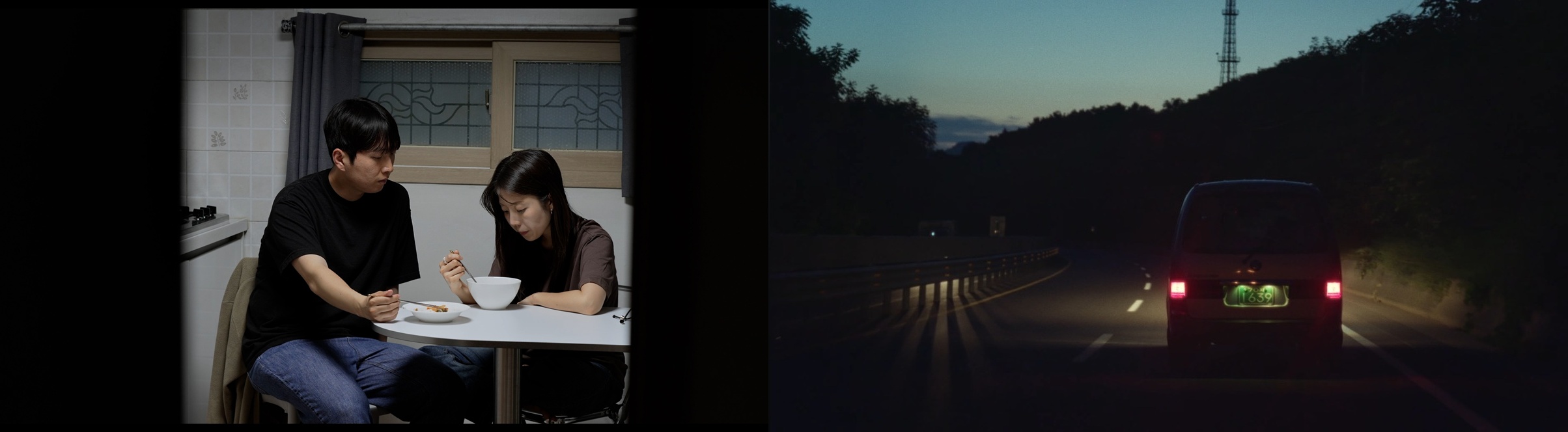 |
| ▲ From the left: INSOMNIA, The Summer That Slipped Away |
INSOMNIA (SO Seongseop) and The Summer That Slipped Away (LEE Seonyeon) both approach the theme of family through distinct and refreshing perspectives. INSOMNIA reconsiders the meaning of family with a restrained, minimalist sensibility, while The Summer That Slipped Away examines the minimal conditions for a family’s existence through a subtle, small-scale comedic disruption.
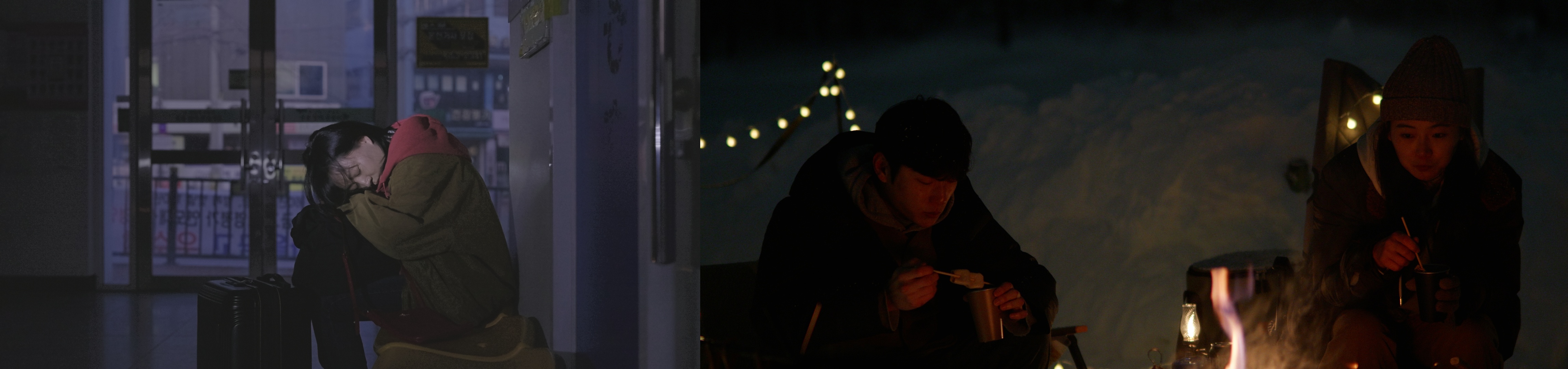 |
| ▲ From the left: Early Spring, Living Through the Same Season |
Early Spring (CHOI Su-bin) may be enough to categorize a film about family. It follows two women, who are not family members, but their continuous clashes probe what family means. Living Through the Same Season (GOH Seng-hyeon) stands out as one of the few romantic narratives in this year’s lineup. It offers a quiet and understated portrayal of a man and a woman living in Gangneung and Wonju, as they enter into a relationship and eventually part ways, rendered with calm realism.
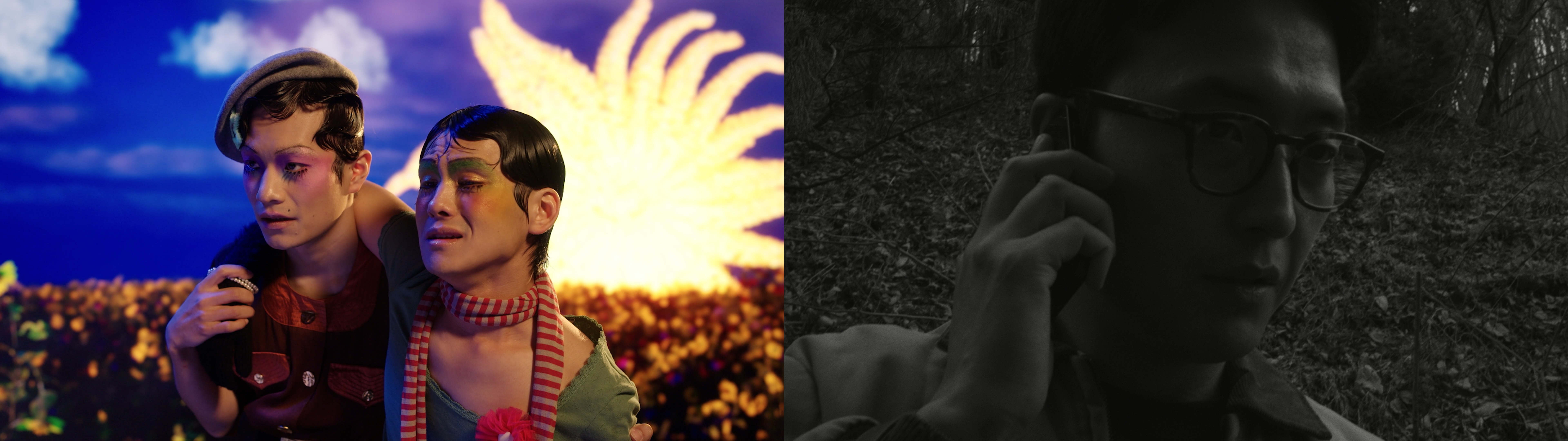 |
| ▲ From the left: Cruel Optimism, KINO EYE |
Cruel Optimism (SHIN Mokya) emerges as the most formally experimental fiction work in the selection, unveiling a spectrum of desires against the backdrop of a visual artist’s debut exhibition. KINO EYE (KIM Gyeonggye, LEE Jungwon) foregrounds a film director as its central character, indirectly engaging with social issues while persistently interrogating the ethics of representation. The jury commented, “Its ability to create tension in unexpected situations was particularly impressive.”
Meanwhile, the Korean Competition selection includes four documentaries, marking an increase of three titles compared to the previous year. The jury expressed its anticipation, noting that this year’s documentaries demonstrated remarkable vitality.
A notable characteristic of this year’s submissions was their direct or indirect engagement with the martial law crisis on December 3, 2024. The jurors remarked that, beyond works engaging with such “grand narratives,” this year’s documentaries demonstrated an overall high level of quality.
The works selected for the Korean Competition and the non-competitive Korean Cinema section displayed a wide range of subjects. The jury highlighted “From the questions they posed to their narrative approaches and even their conclusions, these films displayed a bold yet thoughtful attitude.” In addition, films that push the boundaries of documentary through more experimental approaches demonstrated notable achievements, reflecting a broader trend of increasingly close ties between cinema and the visual arts.
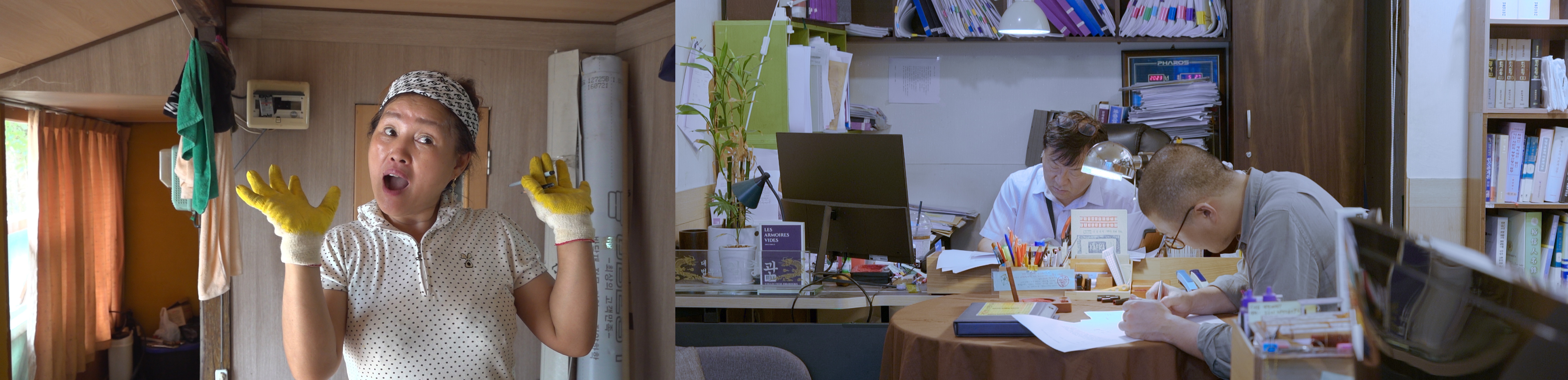 |
| ▲ From the left: Water Deer, Karma |
Water Deer (YU Soyoung), titled Gongsoonee in Korean after the director’s mother, traces her arduous life alongside the director’s long-term effort to document it. Karma (KIM Myunwoo) interweaves the years his father has lived through and the depth of his life, centering on a father who works alongside the director.
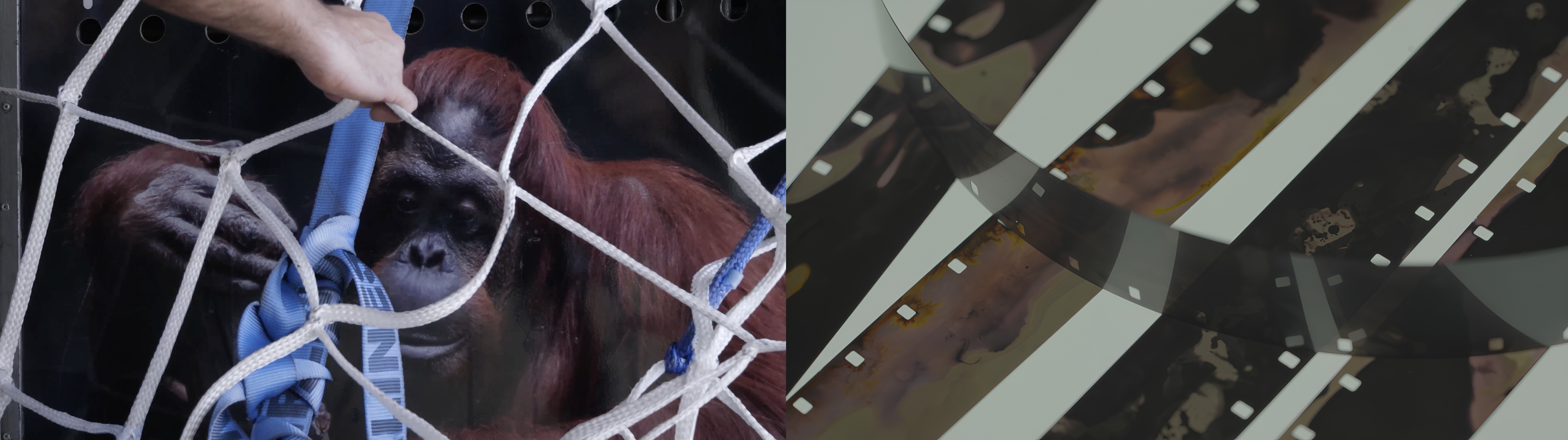 |
| ▲ From the left: Sandra, The Primate Citizen, Erotic Blossoms In A Dream |
Sandra, The Primate Citizen (HA Sinae) follows Sandra the orangutan, the first non-human to be legally recognized as a “non-human person,” raising fundamental questions about humanity. Erotic Blossoms In A Dream (OH Jihyeon), while rooted in documentary form, incorporates experimental elements to examine concepts associated with the Korean term “eumhwa” within historical and social contexts.
The 10 films selected for the Korean Competition will have their premieres at the 27th JEONJU International Film Festival, to be held in Jeonju from April 29 (Wed) to May 8 (Fri), 2026.
Commentary on Korean Competition
Evaluating the Korean Competition section is like looking into the landscape of the contemporary Korean film industry. This year, the trends seen in the submissions to the Korean Competition and non-competitive sections reflect the broader flow of the Korean film industry over the past few years.
First of all, fiction films appear to be generally in decline. This trend seems to share the same pattern as the sluggishness of the mainstream film industry. Compared with previous years, not only has the number of fiction films submitted this year decreased, but their overall quality has struggled to garner positive assessments. Roughly speaking, this year’s Korean film submissions can be divided into two categories.
The first category consists of films that incorporate genre elements. Setting aside cases that claimed to be authentic genre films but did so clumsily, even attempts to fuse a director’s self-consciousness with genre conventions also failed to achieve a high level of accomplishment. The intent to rely on genre devices to increase any chance of commercial success in a grim possibility of box-office prospects is understandable. However, these attempts felt disconnected or awkwardly inserted in most cases.
The second category focuses on family. They also seem to be a variation of the reality-based films that have been well-received at the JEONJU International Film Festival (JEONJU IFF). Notably, the social themes previously prevalent in the JEONJU IFF’s fiction films—such as women, LGBTQ, labor, and human rights—were less prominent this year. Instead, there were a lot of films dealing with families, acting as a projection of society. In particular, many of the relatively well-crafted films belonged to this category, depicting fractured, collapsing, or dissolving families. The causes varied from financial hardship and domestic violence to secrets of birth, and Korean families in this year’s submissions were repeatedly shattered into pieces. Some films achieved meaningful results through this approach, but the majority merely observed the destruction of families or attempted clumsy resolutions. It is deeply curious why our social repercussions are not expressed outwardly but instead penetrate the most private and intimate space of all—family, although the contradictions surely still remain.
Meanwhile, the fiction films selected for the 27th JEONJU IFF’s Korean Competition managed to distance themselves from the shortcomings mentioned above. INSOMNIA and The Summer That Slipped Away both deal with family with fresh perspectives in their own ways. The former questions the meaning of family in a minimalist style, while the latter explores the least conditions for a family to exist through a small-scale comedic disturbance. Early Spring may be enough to categorize a film about family. It follows two women, who are not family members, but their continuous clashes probe what family means. Living Through the Same Season is a rare romantic story among this year’s entries. It calmly and realistically depicts the meeting and parting of a man and a woman living in Gangneung and Wonju, respectively. Cruel Optimism was the most experimental fiction entry. It reveals various desires set against the backdrop of a visual artist’s debut exhibition. KINO EYE, which places a film director at its center, indirectly addresses social issues while persistently questioning the ethics of representation. Its ability to create tension in unexpected situations was particularly impressive.
In contrast, documentaries showed remarkable vitality. It is reasonable to expect this may reflect the immense anger and aspiration triggered in Korean society since late 2024, expressed through documentary, a medium capable of directly capturing such realities. Indeed, a significant number of submissions were directly or indirectly related to the martial law crisis on December 3, 2024. However, more noteworthy is that this year’s documentaries show the overall high quality beyond works dealing with such “grand narratives.” The works selected for the Korean Competition and the non-competitive Korean Cinema section displayed a wide range of subjects. From the questions they posed to their narrative approaches and even their conclusions, these films displayed a bold yet thoughtful attitude. In addition, documentaries at the experimental borders form also achieved notable results, suggesting a recent trend in which cinema is forming increasingly strong connections with the field of visual art.
Water Deer and Karma are documentaries focusing on the directors’ personal histories—specifically their parents, who are both the closest and yet sometimes the most distant figures. Water Deer—the Korean title Gongsoonee—takes the director’s mother’s name as its title, portrays the arduous life of the mother as well as the director’s effort to capture it over a long period. Karma intertwines the passage of time and the weight of a father’s life, who works with the director. Sandra, The Primate Citizen tells the story of Sandra the orangutan, legally granted “non-human personhood” for the first time in the world. Through Sandra’s journey from Buenos Aires, Argentina, to her eventual settlement in the United States, the camera poses fundamental questions to humanity. Erotic Blossoms In A Dream, which examines various elements derived from the Korean word “eumhwa” within both historical and social contexts, is a documentary yet also a work with experimental qualities.
The emergence of a ten-million-viewer hit earlier this year is likely to have some positive influence not only on the Korean film industry as a whole but also on the Korean independent film scene. However, the fragile independent film sector could easily fall into an even deeper slump, whether industrially or in terms of policy. Now is not the time to simply celebrate an improved mood in Korean cinema; rather, it is a moment when everyone must join forces to prepare measures for the future.
Finally, I would like to express my deepest respect to all the filmmakers, producers, and actors who have sent their new films to us despite such challenging environments..
Programmers MOON Seok, Sung MOON, Molly KIM
The 27th JEONJU IFF Korean Competition Selections
※Listed in Korean alphabetical order
| Title |
Director |
Genre |
| Living Through the Same Season |
GOH Seng-hyeon |
Fiction |
| Water Deer |
YU Soyoung |
Documentary |
| Sandra, The Primate Citizen |
HA Sinae |
Documentary |
| Erotic Blossoms In A Dream |
OH Jihyeon |
Documentary |
| Early Spring |
CHOI Su-bin |
Fiction |
| Cruel Optimism |
SHIN Mokya |
Fiction |
| INSOMNIA |
SO Seongseop |
Fiction |
| KINO EYE |
KIM Gyeonggye, LEE Jungwon |
Fiction |
| Karma |
KIM Myunwoo |
Documentary |
| The Summer That Slipped Away |
LEE Seonyeon |
Fiction |
|